Waters Introduces Unrivaled Sensitivity and Speed to Benchtop HRMS with Xevo MRT P10 MS, Accelerating Multiomics Research
- Delivers up to 20x improvement in MS/MS sensitivity and 2x faster acquisition speeds, enabling deeper biological insight for next-generation multiomics, therapeutic, and high-throughput workflows.
- Identifies up to 40% more lipids by LC‑MS/MS than the leading alternative benchtop high‑resolution mass spectrometer, advancing lipidomics research and disease understanding.
- Sets a new benchmark for throughput in high-resolution spatial analysis with the DESI XS source, supporting higher-confidence studies of disease and treatment response.
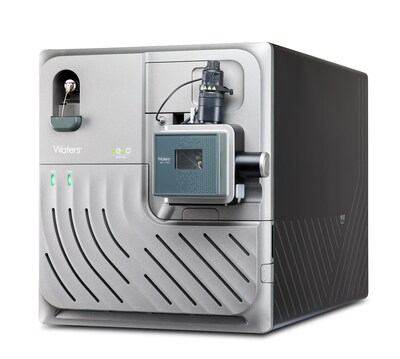
MILFORD, Mass., June 1, 2026 /PRNewswire/ -- 74th ASMS Conference on Mass Spectrometry and Allied Topics—Waters Corporation (NYSE: WAT) today introduced the Waters Xevo™ MRT P10 Mass Spectrometer, a high-resolution Quadrupole Time-of-Flight (QToF) System for high-throughput multiomics, bioanalysis, and biopharmaceutical laboratories. The Xevo MRT P10 MS delivers up to 20x higher MS/MS sensitivity compared to its predecessor, along with industry-leading speed and expanded acquisition modes to comprehensively support both targeted and untargeted analysis in a single benchtop platform. The system is designed to accelerate biomarker discovery and validation while supporting the identification of disease pathways and therapeutic targets across large-cohort biomedical research and epidemiology studies.
"With the Xevo MRT P10 MS, we are raising the standard for benchtop high-resolution mass spectrometry," said James Hallam, Vice President & General Manager, Liquid Chromatography-Mass Spectrometry, Waters Analytical Sciences, Waters Corporation. "By combining enhanced MS/MS sensitivity, the industry's fastest benchtop acquisition speeds, and advanced intelligent acquisition modes in LC-MS/MS – and layering in a new benchmark for MS imaging speed and throughput with our DESI XS – this platform empowers researchers to see more biology, accelerate discovery, and make confident decisions. The Xevo MRT P10 MS represents a powerful step forward for our customers working to advance multiomics research and life‑changing therapies."
As researchers pursue deeper analytical insights, they face a bottleneck: generating high quality MS/MS information at the speed required by modern workflows. The Xevo MRT P10 MS is engineered to solve that problem. It offers up to 20× greater MS/MS sensitivity, helping scientists detect low-abundance compounds in complex samples.1 With acquisition speeds twice as fast as its predecessor, it is the fastest benchtop HRMS system currently available.2 The new system supports rapid throughput, alongside exceptional resolution and mass accuracy, delivering the highest data quality and confidence. When combined with the DESI XS ion source, rapid spatial analysis is unlocked down to the cellular level at up to 200 Hz, increasing throughput six-fold while preserving image quality.3
"As a core research facility, we must be prepared to respond to challenging and often unexpected client requests, many of which relate to research into complex diseases," said Corey Broeckling, Ph.D., Director, Bioanalysis and Omics Center, Colorado State University. "We leverage the exceptional MS/MS sensitivity and fast acquisition rates of the Xevo MRT P10 MS for multiomics research. Its excellent resolution enables us to separate signals of similar mass at very high acquisition speeds, delivering deep, high-quality coverage while maintaining sub‑ppm mass accuracy. Combined with new acquisition modes, this provides the versatility and data confidence we need across a wide range of omics applications."
The Xevo MRT P10 MS is perfectly positioned to support long-term growth across multiomics, including proteomics, lipidomics, and metabolomics, as well as biopharmaceutical analysis and drug discovery. The instrument unlocks new workflows in high-throughput, deep proteome discovery by combining greater sensitivity with ultra-fast acquisition rates and advanced acquisition modes, allowing confident detection of low-abundance peptides and comprehensive protein identification with rapid separations at scale. In comparative lipid profiling by LC-MS/MS, the Xevo MRT P10 MS enabled identification of up to 40% more lipids than the most competitive alternative system.4 These enhancements support more comprehensive biological interpretation in multiomics‑driven research and ultimately drive deeper levels of disease understanding.
The Xevo MRT P10 MS will be showcased at ASMS 2026 and is expected to be available globally beginning summer 2026. For more information or to request a demo, visit the product page.
Additional Resources:
Waters, Xevo, and SONAR are trademarks of Waters Corporation or its affiliates. All other marks are the property of their respective owners.
The P in Xevo MRT P10 denotes Premium, the highest performance tier from Waters and 10 marks the first generation of this platform under Waters' new product naming convention.
About Waters Corporation:
Waters Corporation (NYSE: WAT) is a global leader in life sciences and diagnostics, dedicated to accelerating the benefits of pioneering science through analytical technologies, informatics, and service. With a focus on regulated, high-volume testing environments, our innovative portfolio harnesses deep scientific expertise across chemistry, physics, and biology. We collaborate with customers around the world to advance the release of effective, high-quality medicines, ensure the safety of food and water, and drive better patient outcomes by detecting diseases earlier, managing routine infections, and combating antibiotic resistance. Through a shared culture of relentless innovation, our passionate team of ~16,000 colleagues turn scientific challenges into breakthroughs that improve lives worldwide. For more information, please visit www.waters.com/about.
References:
- Up to 20× improvement in MS/MS sensitivity based on internal Waters testing, comparing Xevo MRT P10 MS to a prior‑generation benchtop Xevo MRT MS under controlled conditions; protocol and sample details on file.
- Maximum acquisition rates (100 Hz MS; 200 Hz MS/MS) versus commercially available benchtop HRMS platforms as of April 2026, based on internal benchmarking.
- Up to 2x improvement in imaging speed, comparing to current Waters Xevo MRT MS with DESI XS, and up to 4x imaging speed compared to next-best competitive MS imaging system. When combined with the DESI XS ion source, rapid spatial analysis is unlocked down to the cellular level at up to 200 Hz, increasing throughput six-fold while preserving image quality.
- Up to 40% more lipid identifications based on comparative lipidomics study using matched sample sets across Xevo MRT P10 MS and a leading benchtop HRMS system; protocol and sample details on file.
Contact:
Molly Gluck
Head of External Communications
Waters Corporation
508.498.9732
molly_gluck@waters.com

Photo - https://mma.prnewswire.com/media/2991645/Waters_Xevo_MRT_P10_MS.jpg
Logo - https://mma.prnewswire.com/media/2071755/Waters_Corporation_Logo.jpg
 View original content:https://www.prnewswire.co.uk/news-releases/waters-introduces-unrivaled-sensitivity-and-speed-to-benchtop-hrms-with-xevo-mrt-p10-ms-accelerating-multiomics-research-302786901.html